
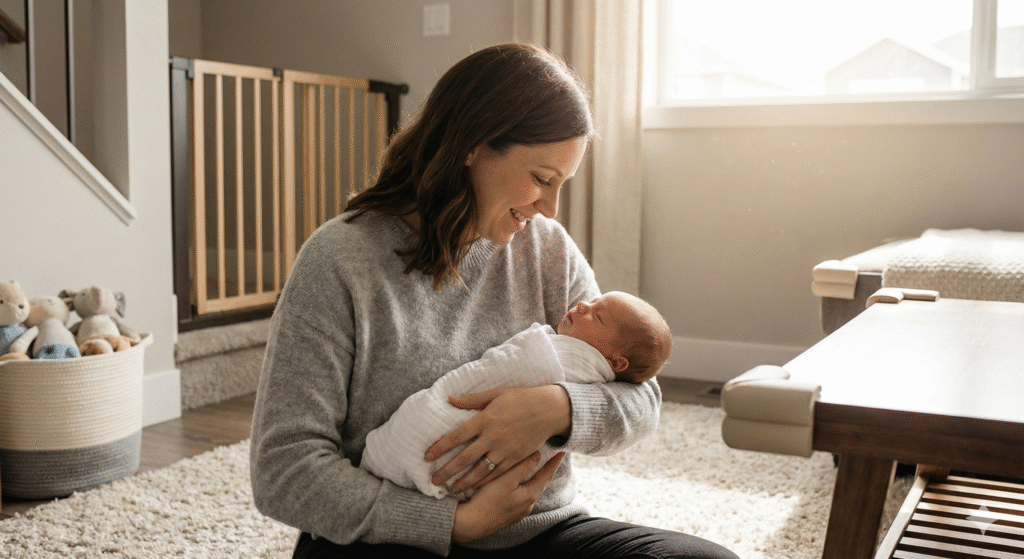
Baby Proofing Made Simple: A Practical Room‑by‑Room Guide for Confident Moms
Introduction
Baby proofing can feel overwhelming—especially when you’re balancing motherhood, housework, and perhaps even work‑from‑home responsibilities. The moment your little one starts rolling, crawling, or pulling up, everyday objects suddenly transform into potential hazards. The good news? Creating a safe home doesn’t have to be complicated or costly. With a clear plan and a few smart tools, you can protect your baby while feeling more confident and in control.
Why Baby Proofing Matters
Babies explore the world with boundless curiosity—through their hands, mouths, and constant movement. Baby proofing helps prevent common risks like falls, burns, electrical shocks, sharp corners, choking hazards, and exposure to harmful items. This guide is designed to support you through every stage, from newborn to 24 months, so you can stay one step ahead as your child grows and discovers the world around them.
Baby Proofing Floors
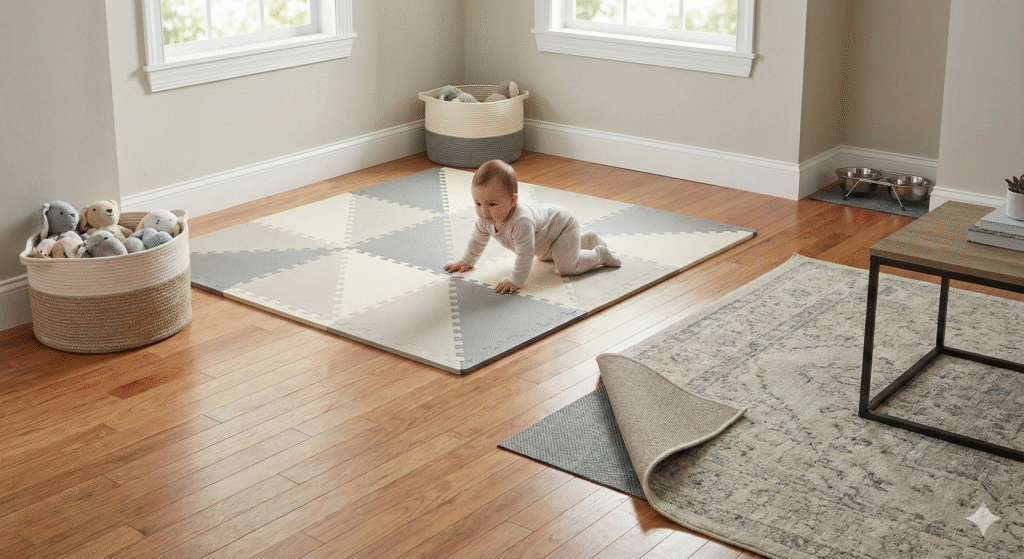
Babies spend much of their early months on the floor, making it the first area to baby proof. Keep floors clean and free of small objects that pose choking hazards. Add soft rugs or foam mats to cushion falls and protect knees during crawling. For hard or slippery surfaces, use non‑slip mats to reduce accidents. Scan the ground from your baby’s perspective to spot hidden risks like cords, sharp edges, or uneven thresholds. Creating a safe, comfortable floor space not only prevents injuries but also encourages your little one to explore and grow with confidence.
Baby Proofing Windows
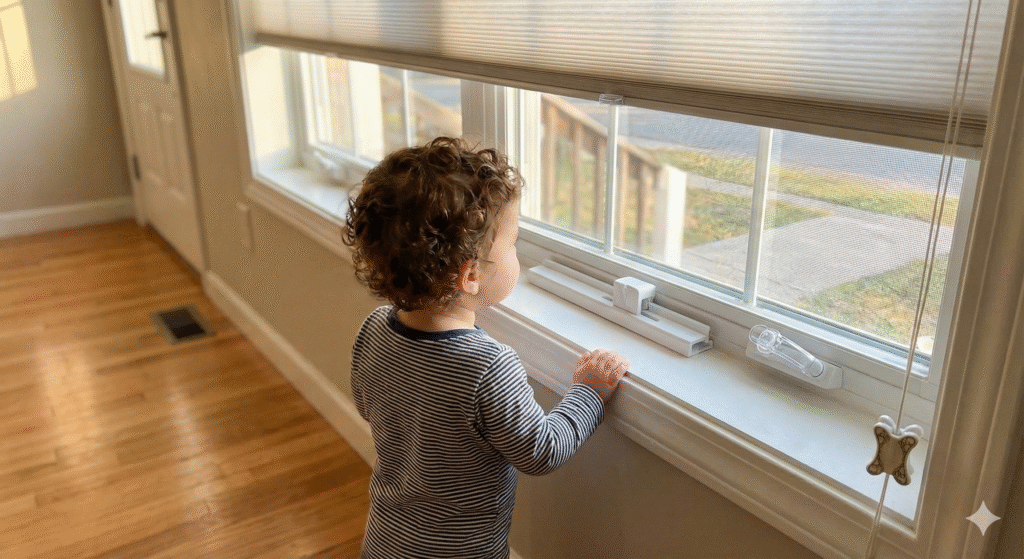
Curious toddlers are naturally drawn to windows, eager to peek outside and explore the world beyond. While their fascination is adorable, it also makes window safety a top priority. Keep furniture away from windows to prevent climbing, and always secure locks or latches to stop little hands from opening them. Install sturdy window guards or safety netting, especially in upper floors, and avoid relying solely on screens—they aren’t strong enough to hold a child’s weight. Cordless blinds or secured curtain ties help eliminate strangulation risks. By baby proofing windows, you create a safe space where curiosity can thrive without danger.
Baby Proofing Stairs
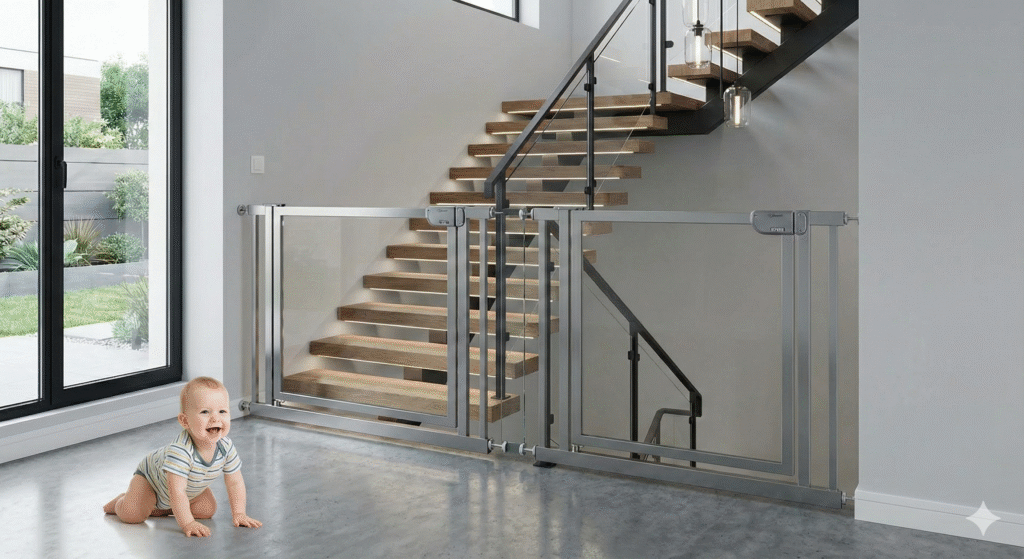
Stairs quickly become one of the biggest hazard zones once babies start crawling and exploring. To keep them safe, install sturdy safety gates at both the top and bottom of staircases, ensuring they’re securely latched and properly fitted. Keep steps clear of toys, shoes, or clutter that could cause tripping, and add non‑slip treads or carpeting to reduce slips on smooth surfaces. Handrails should be firmly fixed, and balusters checked for gaps wide enough for tiny bodies to squeeze through. By baby proofing stairs, you minimize risks and give your little one freedom to move safely around the home.
Baby Proofing the Kitchen
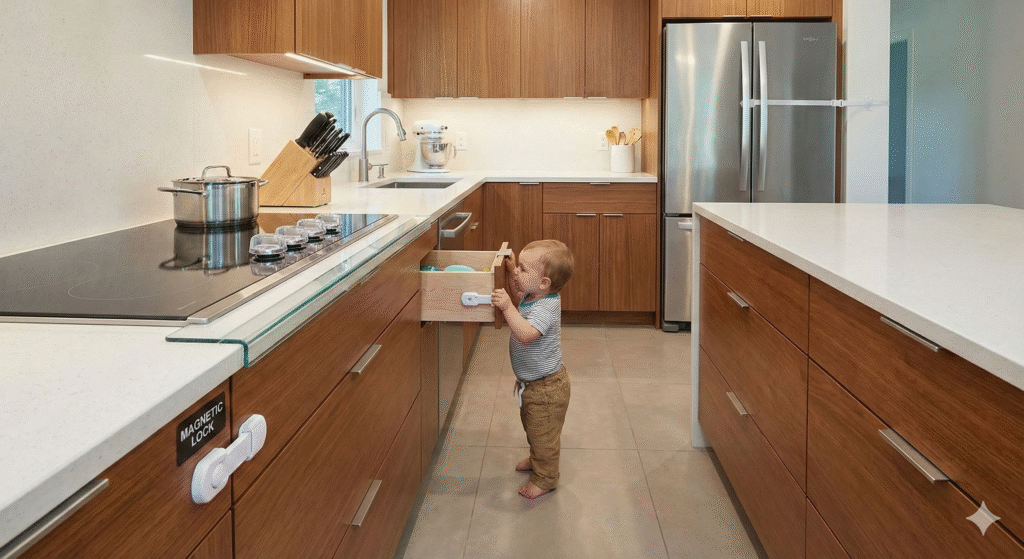
The kitchen is one of the most hazardous spaces for little explorers, filled with heat, sharp tools, chemicals, and heavy appliances. To keep it safe, start by securing cabinets and drawers with childproof locks, especially those storing cleaning supplies or utensils. Use stove knob covers and keep hot pots or pans on back burners, out of reach. Unplug small appliances when not in use, and tuck cords away to prevent pulling. Install safety latches on the refrigerator and dishwasher, and never leave a toddler unattended while cooking. Baby proofing the kitchen transforms it from a danger zone into a safe, family-friendly hub.
Baby Proofing the Bathroom
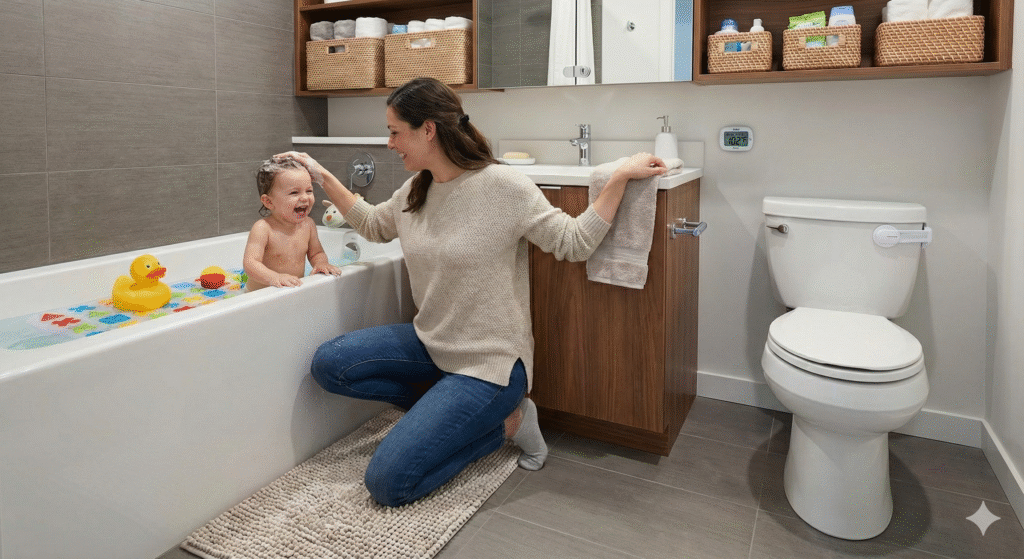
Slippery floors and curious hands make the bathroom a high‑risk zone for little ones. Always keep the toilet lid closed with a safety lock to prevent accidents, and store all cleaning products, toiletries, and medicines in locked cabinets well out of reach. Use non‑slip mats both inside and outside the tub to reduce falls, and install soft spout covers to protect against bumps. Keep electrical items like hair dryers unplugged and away from water. By baby proofing the bathroom, you turn a space full of hidden dangers into a safer environment where exploration doesn’t come at the cost of safety.
Baby Proofing the Nursery
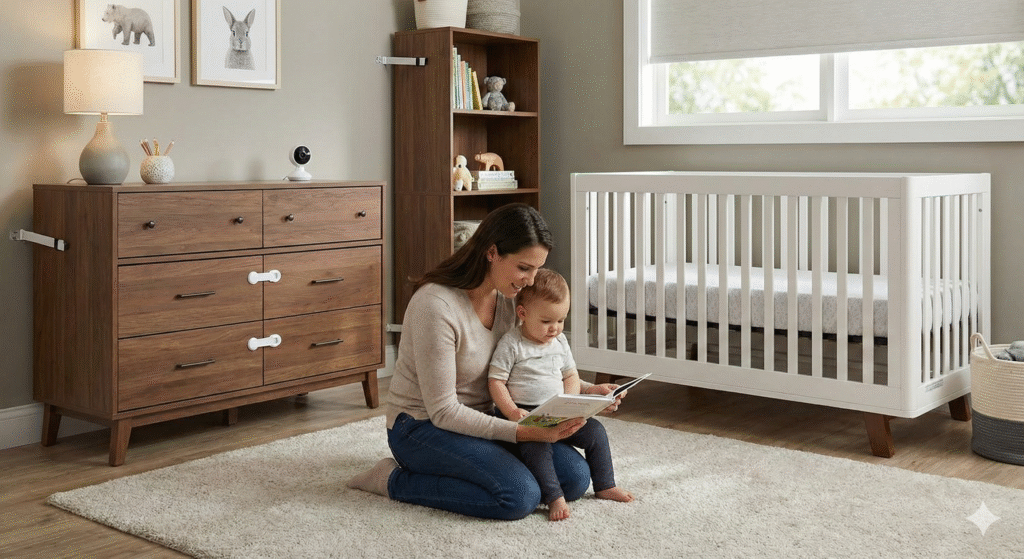
Your baby’s nursery should be a safe, calm, and clutter‑free haven. Anchor heavy furniture like dressers and bookshelves to the wall to prevent tipping, and keep cribs away from windows, cords, or blinds. Choose a firm mattress with fitted sheets, and avoid pillows, blankets, or stuffed toys inside the crib to reduce suffocation risks. Use outlet covers and secure any loose wires to keep curious hands safe. Store toys and essentials in bins or baskets to minimize clutter and create a soothing environment. Baby proofing the nursery ensures your little one rests, plays, and grows in a secure space.
Baby Proofing Furniture
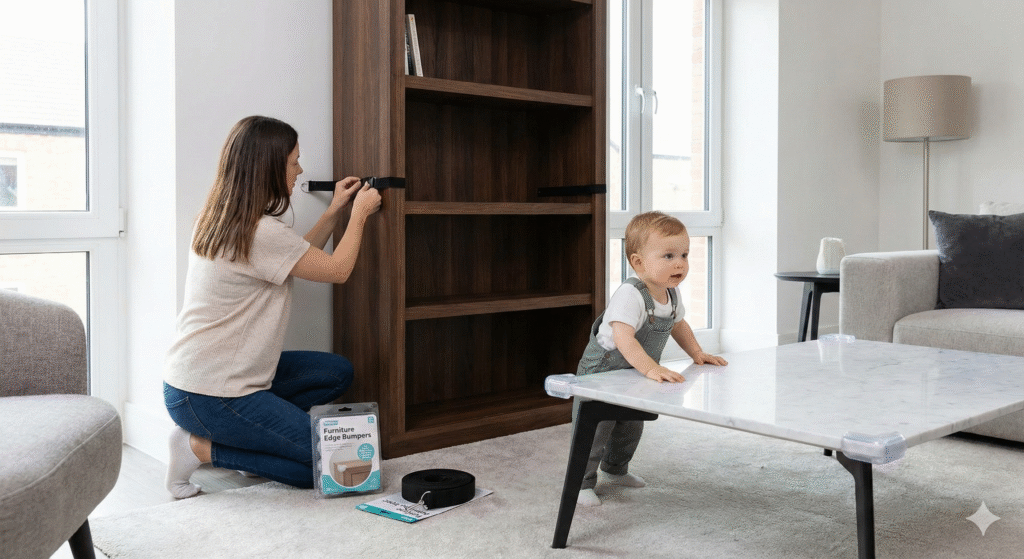
Large or unstable furniture can quickly become dangerous once babies start pulling themselves up. Anchor heavy items like bookshelves, dressers, and TVs securely to the wall to prevent tipping accidents. Keep smaller pieces, such as side tables or lamps, out of reach or firmly stabilized. Avoid placing tempting objects—like toys or remotes—on top of furniture, as curious hands may try to climb toward them. Check for sharp corners and add cushioned guards to protect against bumps. By baby proofing furniture, you create a safer environment where your little one can explore without the risk of falling hazards.
Baby Proofing Electrical Outlets & Cables
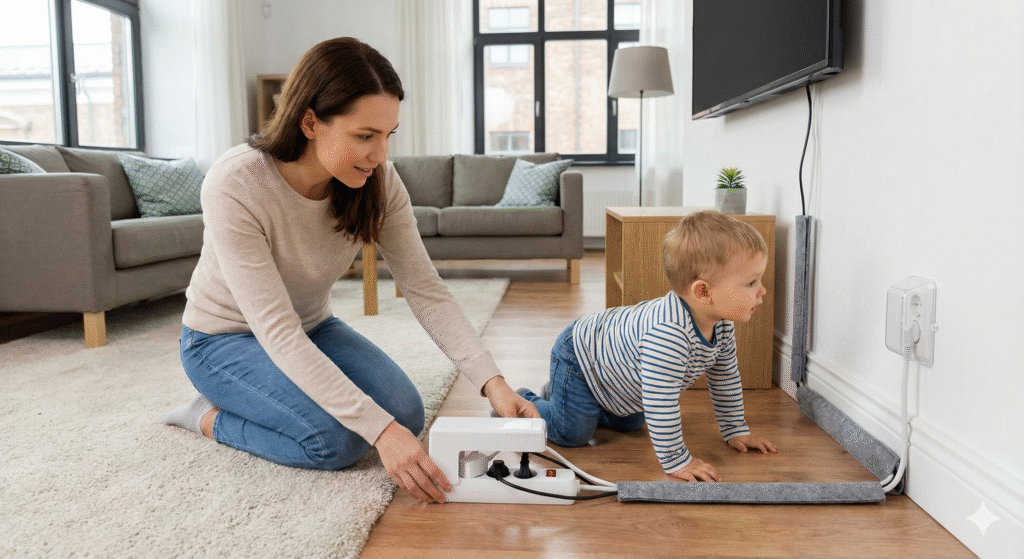
Electrical outlets and cables are one of the easiest—and most important—areas to secure. Cover all unused outlets with safety plugs or outlet covers to keep curious fingers safe. Hide or organize loose cables with cord concealers or clips to prevent pulling, chewing, or tripping. Keep power strips out of reach, and avoid leaving chargers plugged in when not in use. Position lamps, electronics, and appliances so cords aren’t dangling within a baby’s grasp. By baby proofing outlets and cables, you eliminate hidden electrical risks and create a safer environment for your little one’s everyday adventures.
Extra Tips for Empowered Moms
Parenting is demanding, and baby proofing can feel like just another task on an endless list.
- Tackle it step by step—there’s no need to do everything at once. Remember: you’re doing enough, and baby proofing is about prevention, not perfection.
- Choose safety products that genuinely make your life easier.
- Don’t hesitate to ask for help—your safety plan doesn’t have to be a solo effort.
- Tools like planners, storage baskets, or baby safety checklists can keep you organized, and a simple printable checklist makes the process faster and stress‑free.
Conclusion
Baby proofing may feel overwhelming at first, but breaking it down room by room makes the process manageable and effective. From securing floors where babies spend most of their time, to safeguarding windows, stairs, kitchens, bathrooms, nurseries, furniture, and electrical outlets, each step builds a safer environment for your little explorer. The goal isn’t perfection—it’s prevention and peace of mind. By anchoring furniture, locking cabinets, covering outlets, and adding simple safety tools, you create a home that encourages curiosity without compromising safety. Trust yourself—you’re doing enough. With every adjustment, you’re not just protecting your baby, you’re nurturing a home where curiosity and growth can flourish safely.